
Lake Manyara National Park Safari Guide
Tree-climbing lions, flamingo-lined shores and lush groundwater forest beneath the Great Rift Valley escarpment.
- SettingGreat Rift Valley
- Best timeJune - October
- Ideal stayHalf to 1 day
- Known forTree-climbing lions
Lake Manyara at a glance
Lake Manyara National Park lies at the foot of the dramatic Great Rift Valley escarpment, between Arusha and the Ngorongoro highlands. Much of the park is taken up by the shallow, alkaline Lake Manyara, while the land around it changes from lush groundwater forest and acacia woodland to open floodplains and hot springs.
Its compact size makes it an easy and rewarding stop on a northern Tanzania safari. Visitors come for the famous tree-climbing lions, large baboon troops, elephants, giraffes and hippos, and a remarkable variety of birdlife - including flamingos and pelicans along the lake shore when water levels are right.
Why visit Lake Manyara?
One of the few places in Africa where lions are known to rest in the branches of trees.
Forest, woodland, floodplains, hot springs and the lake - all in a compact park.
Flamingos, pelicans, storks and hornbills make Manyara a favourite with birders.
It sits right on the route to Ngorongoro and Serengeti, so it fits easily into any itinerary.
Where is Lake Manyara located?
Lake Manyara National Park lies in northern Tanzania, beside the town of Mto wa Mbu on the main road from Arusha to the Ngorongoro Crater and Serengeti. The main gate is just outside Mto wa Mbu.
- Arusha to Lake Manyara: about 120 - 125 km (around 2 - 2.5 hours)
- Lake Manyara to the Ngorongoro Crater: around 55 - 60 km (about 1 hour)
- Lake Manyara airstrip is located near the park, served by light-aircraft flights
- Distances and driving times are approximate and depend on road conditions and wildlife stops.
Top attractions and highlights in Lake Manyara
Groundwater forest
An evergreen forest fed by underground springs, home to blue monkeys, baboons and elephants.
The lake shore
Floodplains where flamingos, pelicans, buffaloes and wildebeest gather.
Treetop walkway
A suspended walkway through the forest canopy offering a bird's-eye view of the forest.
Hippo pool
A favourite stop to watch hippos and water birds up close.
Hot springs
Natural springs in the south of the park, surrounded by striking scenery.
Rift Valley escarpment
The towering wall of the Great Rift Valley forms a dramatic backdrop to every game drive.
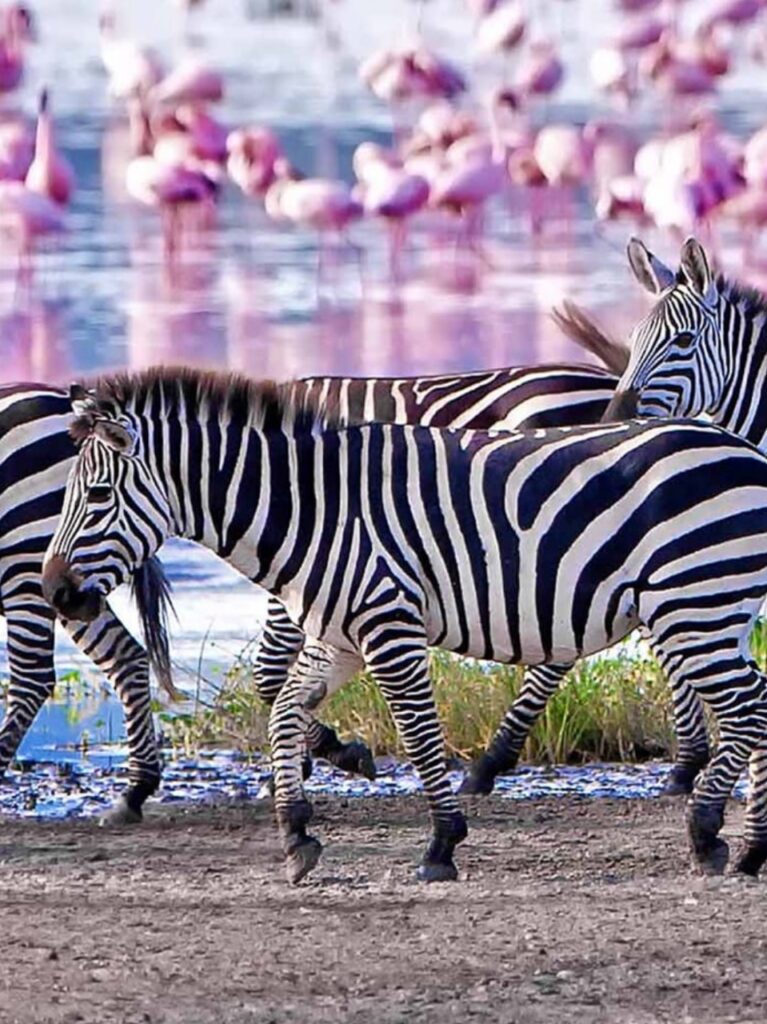
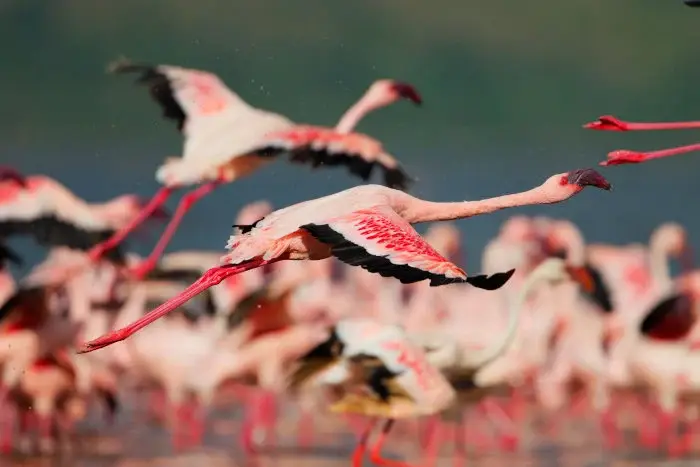

Wildlife and animals you can see in Lake Manyara
For its size, Lake Manyara supports a surprising diversity of wildlife. Sightings of tree-climbing lions are never guaranteed, but the park's elephants, baboons and hippos are seen on most visits.
- Lion
- Elephant
- Olive baboon
- Blue monkey
- Hippo
- Giraffe
- Buffalo
- Zebra
- Wildebeest
- Impala
- Warthog
- Bushbuck
- Leopard (rare)
Birdwatching
Lake Manyara is one of Tanzania's top birding parks, with several hundred species recorded across its forest, woodland and lake habitats.
- Lesser flamingo
- Great white pelican
- Yellow-billed stork
- Silvery-cheeked hornbill
- African fish eagle
- Grey-crowned crane
- Kingfishers
- Crowned eagle
Wildlife sightings are never guaranteed - animals move freely and every safari is different.
Best time to visit Lake Manyara
Every season offers something different. Here is what to expect through the year. For the bigger picture, read our guide to Tanzania's travel seasons.
January - March
Lush scenery and excellent birdwatching, with flamingos and migratory birds often present on the lake.
April - May
The forest and woodland are at their greenest and the park is quiet. Some tracks can be muddy after heavy rain.
June - October
The best time for general game viewing. Thinner vegetation and animals near water make wildlife easier to spot.
November - December
Fresh greenery returns and migratory birds arrive - a rewarding time for birders and photographers.
Weather and climate
Lake Manyara has a warm climate, sheltered by the Rift Valley escarpment. Days are generally warm and the groundwater forest stays green all year. Short rains usually fall around November - December and long rains around March - May. Water levels in the lake vary from year to year, which affects where flamingos and other water birds gather.
Things to do and activities in Lake Manyara
Only activities available in and around the destination are listed. Some require separate permits and are arranged in advance.
Game drives
Half-day and full-day drives through the forest, woodland and floodplains.
Treetop walkway
A guided walk along suspension bridges high in the forest canopy - great for families.
Night game drives
Ranger-guided night drives may be arranged to look for nocturnal wildlife. Ask us about availability.
Canoeing
Seasonal canoe trips on the lake, depending on water levels.
Birdwatching
Hundreds of species across forest, woodland and water.
Mto wa Mbu cultural tour
Walk or cycle through the lively village at the park gate, visiting farms, markets and craft workshops.
Safari experiences
Lake Manyara is ideal as a half-day or full-day game drive on the way to the Ngorongoro Crater, or as a relaxed first stop after Arusha. Combine it with Tarangire for a short two-park safari, or add the treetop walkway and a cultural tour in Mto wa Mbu for a varied day.
Explore safari packagesWhere to stay in Lake Manyara
We match your accommodation to your travel style and budget, from mid-range lodges to semi-luxury tented camps.
Escarpment lodges
Lodges on the Rift Valley escarpment with sweeping views over the lake.
Tented camps
Tented camps inside and near the park for a closer-to-nature stay.
Mto wa Mbu & Karatu
Good-value lodges, guesthouses and campsites close to the park and on the way to Ngorongoro.
How to get to Lake Manyara
Lake Manyara is about 2 - 2.5 hours from Arusha on a good tarmac road through Makuyuni and Mto wa Mbu.
Light-aircraft flights connect Arusha and Serengeti with the Lake Manyara airstrip, convenient for fly-in safaris.
How many days do you need?
A half-day or full-day game drive is usually enough to enjoy Lake Manyara's highlights. Spend a night nearby if you want to add the treetop walkway, a night drive or a cultural tour in Mto wa Mbu.
Book your adventureLake Manyara park fees
Indicative non-resident adult rates including 18% VAT, as published for the 2025/26 season. Fees are set by the park authorities, can change without notice and differ for children, East African citizens and residents. Your Vafe Tours quote always lists the exact park fees.
Official information: Tanzania National Parks (TANAPA)
| Lake Manyara conservation fee | approx. US$59 per adult / 24 hours |
|---|---|
| Activities (night drives, walkway, canoeing) | charged separately - included in your quote when booked |
| Children under 5 | free |
Travel tips and what to pack
- Look up into the acacia trees - that's where the lions rest
- Bring binoculars for the birdlife on the lake shore
- Keep windows closed near baboons and never feed wildlife
- Pack insect repellent for the forest and lake areas
- Combine with Tarangire or Ngorongoro for a short safari
- Ask us to add the treetop walkway when you book
More advice: 5 important things to do before travelling to Tanzania.
Cultural experiences
The village of Mto wa Mbu at the park gate is one of the most diverse communities in Tanzania, with people from many different ethnic groups. Cultural tours include banana farms, local markets, traditional food and visits to artists and craftspeople.
Family safaris
The treetop walkway, baboons and hippo pool make Lake Manyara a favourite with children, and its short distances keep game drives manageable for families.
Honeymoon safaris
Escarpment lodges with views over the lake, sunset drinks and a gentle start to your safari make Lake Manyara a lovely honeymoon stop.
Frequently asked questions about Lake Manyara
Can't find your answer? Contact our safari experts - we're happy to help.
What is Lake Manyara National Park famous for?
Lake Manyara is best known for its tree-climbing lions, flamingos and other water birds, lush groundwater forest and views of the Great Rift Valley escarpment.
Will I see tree-climbing lions?
Lake Manyara is one of the few places where lions are known to climb trees, but sightings are never guaranteed. Our guides know the areas where they are most often seen.
How much time should I spend in Lake Manyara?
A half-day or full-day game drive is usually enough. Stay a night nearby to add the treetop walkway, a night drive or a cultural tour.
Are there flamingos at Lake Manyara?
Flamingos are often seen on the lake, but their numbers vary with water levels and the season.
How much are the Lake Manyara park fees?
Non-resident adults pay approximately US$59 per 24 hours including VAT (2025/26). Activities are charged separately. Fees can change; your quote lists them clearly.
Is Lake Manyara worth visiting?
Yes. Its varied landscapes, birdlife and compact size make it a rewarding addition to a safari with Tarangire, Ngorongoro and Serengeti.
Northern Tanzania safaris you can customise to include Lake Manyara
5 Days Mid-Range Safari
Tarangire, Serengeti & NgorongoroFrom $1,050View details →

6 Days Semi-Luxury Northern Tanzania Safari
Tarangire, Serengeti & NgorongoroFrom $6,680View details →
Every Vafe Tours safari can be tailor-made. Tell us your dates and wishes and we'll build your perfect trip.
Customize your safariCombine Lake Manyara with other destinations
The Ngorongoro Crater is about an hour away, Tarangire is a short drive east, and the road continues on to the Serengeti. See also 5 must-visit places in Tanzania.
Plan your Lake Manyara safari with Vafe Tours
Share your travel dates and preferences and our team will prepare a personalised itinerary and quote, free of charge and with no obligation.
- Tailor-made private safaris
- Experienced local guides
- Licensed operator based in Arusha