
Ngorongoro Crater Travel Guide
The world's largest intact volcanic caldera and a UNESCO World Heritage Site, where the Big Five live within a single natural amphitheatre.
- StatusUNESCO World Heritage Site
- Best timeJune - October
- Ideal stay1 - 2 days
- Known forBig Five & black rhino
Ngorongoro at a glance
The Ngorongoro Conservation Area is one of Africa's most remarkable safari destinations and a UNESCO World Heritage Site. At its heart lies the Ngorongoro Crater, the world's largest intact volcanic caldera, whose steep walls enclose grasslands, swamps, forest and a soda lake that support wildlife throughout the year.
Unlike a national park, Ngorongoro is a multiple land-use area where Maasai pastoralists live alongside wildlife. This combination of dramatic highland scenery, dense wildlife and living culture makes it a highlight of every northern Tanzania safari - and one of the best places in Africa to see a black rhino.
Why visit Ngorongoro?
The crater's high concentration of animals gives you one of the best chances in Africa to see the Big Five on a single game drive.
Ngorongoro is one of the most reliable places in Tanzania to spot the critically endangered black rhino.
The view from the crater rim across the caldera floor is one of the most famous panoramas in Africa.
Meet Maasai communities and visit Olduvai Gorge, one of the world's most important sites for the study of human origins.
Where is Ngorongoro located?
Ngorongoro lies in the Crater Highlands of northern Tanzania, between Lake Manyara and the Serengeti. The main entrance is Lodoare Gate, a short drive from the town of Karatu, where many safari lodges are located.
- Arusha to the crater rim: roughly 180 - 190 km (about 3.5 - 4 hours)
- Lake Manyara to Ngorongoro: around 55 - 60 km (about 1 hour)
- Ngorongoro to central Serengeti: around 135 - 140 km (about 3 - 3.5 hours)
- Distances and driving times are approximate and depend on road conditions and wildlife stops.
Top attractions and highlights in Ngorongoro
Ngorongoro Crater floor
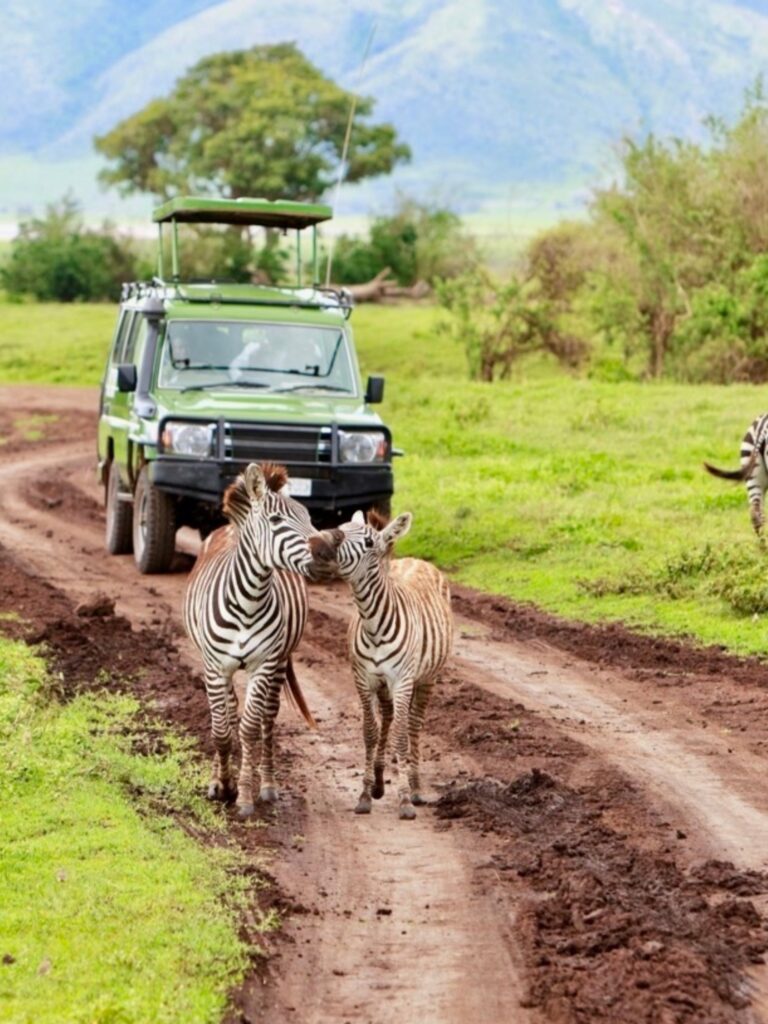
Open grasslands, swamps and woodland teeming with zebras, wildebeest, buffaloes, lions and hyenas.
Lake Magadi
A shallow soda lake on the crater floor where flamingos and other water birds gather.
Lerai Forest
Yellow-barked acacia forest that shelters elephants and is a good place to look for rhino.
Crater rim viewpoints
Spectacular lookouts over the caldera, especially beautiful in the early morning mist.
Olduvai Gorge
A world-famous archaeological site with a museum explaining the discoveries of early human ancestors.
Empakaai & Olmoti craters
Quieter volcanic craters in the highlands, offering scenic guided walks away from the crowds.

Wildlife and animals you can see in Ngorongoro
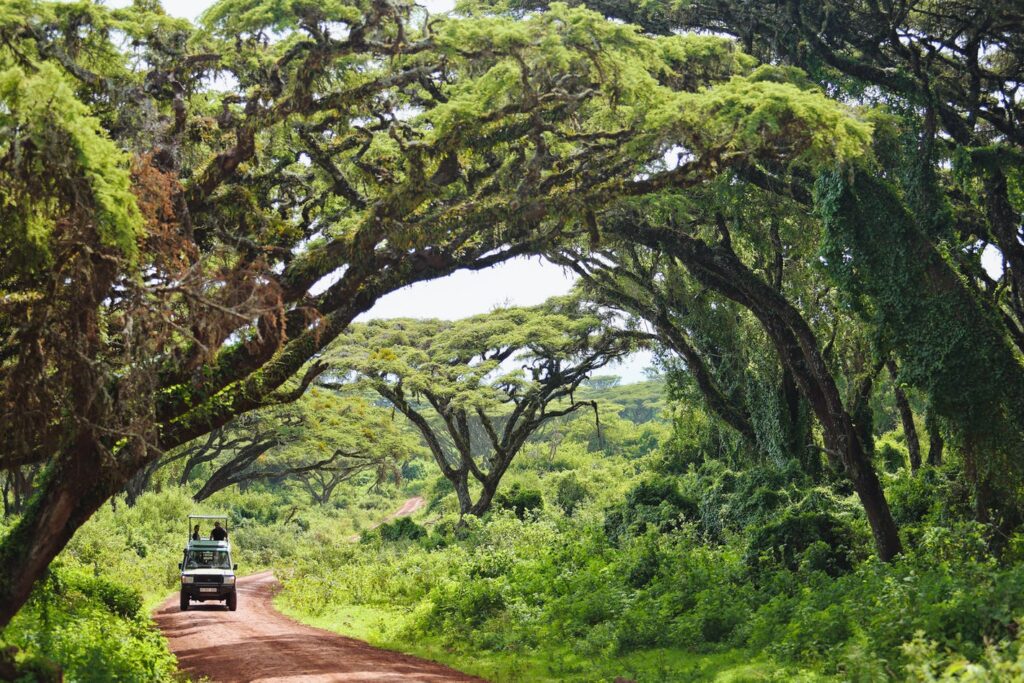
Thousands of animals live in and around the crater all year round. Because the crater floor is open and enclosed, wildlife viewing is easy and productive, even on a single day.
- Black rhino
- Lion
- Elephant
- Buffalo
- Leopard (rare)
- Spotted hyena
- Wildebeest
- Zebra
- Hippo
- Golden jackal
- Serval
- Eland
- Warthog
- Grant's gazelle
Birdwatching
The crater's lake, swamps and grasslands attract a rich variety of birds, while the forested rim is home to highland species.
- Flamingos
- Grey-crowned crane
- Kori bustard
- Ostrich
- Augur buzzard
- Sunbirds
- Egrets
- Vultures
Wildlife sightings are never guaranteed - animals move freely and every safari is different.
Best time to visit Ngorongoro
Every season offers something different. Here is what to expect through the year. For the bigger picture, read our guide to Tanzania's travel seasons.
January - March
Lush green landscapes and excellent wildlife viewing inside the crater. The scenery is especially beautiful after the short rains - great for photography.
April - May
Greener landscapes and fewer visitors. Rain may affect driving conditions, but wildlife viewing remains rewarding and peaceful.
June - October
The best time for clear and easy wildlife viewing. Dry conditions make animals easier to spot, and the weather is cool and comfortable.
November - December
The short rains refresh the landscape with vibrant greenery. Wildlife remains abundant and birdlife becomes more active.
Weather and climate
Because the crater rim sits at more than 2,000 metres above sea level, Ngorongoro is much cooler than the surrounding parks. Mornings and evenings on the rim can be cold and misty - pack warm layers in every season. The crater floor is warmer during the day. Rain follows the northern Tanzania pattern of short rains around November - December and long rains around March - May.
Things to do and activities in Ngorongoro
Only activities available in and around the destination are listed. Some require separate permits and are arranged in advance.
Crater game drive
A half-day or full-day 4x4 game drive on the crater floor - the highlight of any visit. Walking is not allowed on the crater floor.
Crater rim walks
Guided walks with an armed ranger in permitted areas of the highlands, such as Empakaai and Olmoti craters.
Maasai cultural visit
Visit a Maasai boma (homestead) to learn about traditions, dances and daily life.
Olduvai Gorge museum
Discover the story of early humans at one of the world's most important palaeontological sites.
Photography
Misty sunrises, crater views and close wildlife encounters for unforgettable images.
Safari experiences
Most visitors spend one full day exploring the crater floor, descending early in the morning when the light is soft and the wildlife is active. Ngorongoro fits naturally between Lake Manyara or Tarangire and the Serengeti, so it is included in almost every northern circuit itinerary. Stay on the crater rim for spectacular views, or in Karatu for great value close to the gate.
Explore safari packagesWhere to stay in Ngorongoro
We match your accommodation to your travel style and budget, from mid-range lodges to semi-luxury tented camps.
Crater rim lodges
Lodges perched on the rim with views over the caldera - ideal for an early descent.
Karatu lodges
Farm-style lodges and guesthouses in the green highlands near Lodoare Gate, offering great value.
Campsites
Simple public campsites on the crater rim for budget camping safaris - nights are cold.
How to get to Ngorongoro
Drive from Arusha via Mto wa Mbu and Karatu to Lodoare Gate on a good tarmac road, then climb to the crater rim. Only 4x4 safari vehicles may descend to the crater floor.
The nearest airstrip is at Lake Manyara. Most travellers reach Ngorongoro by road as part of a northern circuit safari.
How many days do you need?
One full day is enough to explore the crater floor. Add a second day if you want to visit Olduvai Gorge, a Maasai village or the Empakaai Crater, or simply enjoy the highlands at a slower pace. Ngorongoro is usually combined with Serengeti, Tarangire and Lake Manyara on a 4 to 8 day safari.
Book your adventureNgorongoro park fees
Indicative non-resident adult rates including 18% VAT, as published for the 2025/26 season. Fees are set by the park authorities, can change without notice and differ for children, East African citizens and residents. Your Vafe Tours quote always lists the exact park fees.
Official information: Ngorongoro Conservation Area Authority (NCAA)
| Ngorongoro conservation fee | approx. US$70.80 per adult / 24 hours |
|---|---|
| Crater service fee | approx. US$295 per vehicle per descent |
| Children under 5 | free |
Travel tips and what to pack
- Pack warm layers, a fleece and a light jacket - the crater rim is cold in the mornings
- Start early to enjoy the crater before it gets busy
- Bring a packed lunch, as there are no restaurants on the crater floor
- Use binoculars to spot rhinos, which often keep their distance
- Dust can be heavy in the dry season - protect your camera
- Respect local customs and ask before photographing people
More advice: 5 important things to do before travelling to Tanzania.
Cultural experiences
The Ngorongoro Conservation Area is home to Maasai communities who graze their cattle alongside wildlife. A respectful visit to a Maasai boma offers insight into their traditions, homes and beadwork. The nearby Olduvai Gorge museum tells the story of our earliest ancestors.
Family safaris
A crater game drive is ideal for families: wildlife is plentiful and close, and the day can be planned around children's energy levels. Rim lodges with warm rooms and fireplaces are popular with families.
Honeymoon safaris
Wake up to mist rolling over the caldera, enjoy a private picnic on the crater floor and end the day by the fire in a rim lodge - a romantic highlight of any honeymoon safari.
Frequently asked questions about Ngorongoro
Can't find your answer? Contact our safari experts - we're happy to help.
What is Ngorongoro famous for?
Ngorongoro is famous for its massive volcanic crater, which holds one of the highest densities of wildlife in Africa. It is especially known for Big Five sightings, black rhinos and stunning scenery.
Can I see the Big Five in Ngorongoro?
Yes. Ngorongoro is one of the best places in Africa to see the Big Five in a single game drive, including the rare black rhino. Leopards are the hardest to spot.
How long is a Ngorongoro Crater tour?
A crater game drive usually lasts half a day to a full day. Most visitors spend one or two nights in the area as part of a longer safari.
How much does it cost to visit the Ngorongoro Crater?
Non-resident adults pay a conservation fee of approximately US$70.80 per 24 hours plus a crater service fee of approximately US$295 per vehicle per descent (2025/26). Fees can change; your quote lists them clearly.
Is it cold at Ngorongoro?
Yes, the crater rim is at high altitude and can be cold and misty in the mornings and evenings all year. Bring warm layers.
Is Ngorongoro a national park?
No. It is a conservation area managed by the Ngorongoro Conservation Area Authority, where Maasai people live alongside wildlife.
Safaris that visit Ngorongoro

6 Days Semi-Luxury Northern Tanzania Safari
Tarangire, Serengeti & NgorongoroFrom $6,680View details →
5 Days Mid-Range Safari
Tarangire, Serengeti & NgorongoroFrom $1,050View details →
Every Vafe Tours safari can be tailor-made. Tell us your dates and wishes and we'll build your perfect trip.
Customize your safariCombine Ngorongoro with other destinations
From Ngorongoro, the road continues west to the Serengeti, while Lake Manyara and Tarangire lie just an hour or two to the east. See also 5 must-visit places in Tanzania.
Plan your Ngorongoro safari with Vafe Tours
Share your travel dates and preferences and our team will prepare a personalised itinerary and quote, free of charge and with no obligation.
- Tailor-made private safaris
- Experienced local guides
- Licensed operator based in Arusha