
Mount Kilimanjaro Travel & Climbing Guide
Africa’s highest mountain and the world’s tallest free-standing peak - a once-in-a-lifetime trek from rainforest to glaciers, no technical climbing required.
- Summit5,895 m - Uhuru Peak
- Best timeJan - Mar & Jun - Oct
- Ideal climb6 - 9 days
- Known forRoof of Africa
Kilimanjaro at a glance
Mount Kilimanjaro is the highest mountain in Africa and one of the world’s great trekking adventures. Rising to 5,895 metres at Uhuru Peak, it towers above the plains of northern Tanzania near the towns of Moshi and Arusha, and its snow-capped summit is visible from far away on a clear day.
The mountain is made up of three volcanic cones - Kibo, Mawenzi and Shira - and is protected as Kilimanjaro National Park, a UNESCO World Heritage Site. Climbers do not need technical mountaineering skills, but good preparation, enough days for acclimatisation and an experienced, licensed guiding team make the difference between a hard walk and a safe, successful summit.
Why visit Kilimanjaro?
Stand on the highest point of the continent at 5,895 m - a bucket-list achievement.
A trekking mountain: with time to acclimatise, fit beginners can reach the top.
Walk from farmland and rainforest through moorland and alpine desert to the glaciers.
Combine your climb with the Serengeti, Ngorongoro or a Zanzibar beach break.
Where is Kilimanjaro located?
Kilimanjaro rises in north-eastern Tanzania, close to the Kenyan border. The town of Moshi, at the foot of the mountain, is the usual base for climbs, while Arusha - home of Vafe Tours - is a convenient start for combining a climb with a safari.
- Kilimanjaro International Airport (JRO) to Moshi: about 1 hour by road
- Arusha to Moshi: about 1.5 - 2 hours by road
- Moshi to the Marangu and Machame gates: about 1 hour
- Distances and driving times are approximate and depend on road conditions and wildlife stops.
Top attractions and highlights in Kilimanjaro
Uhuru Peak
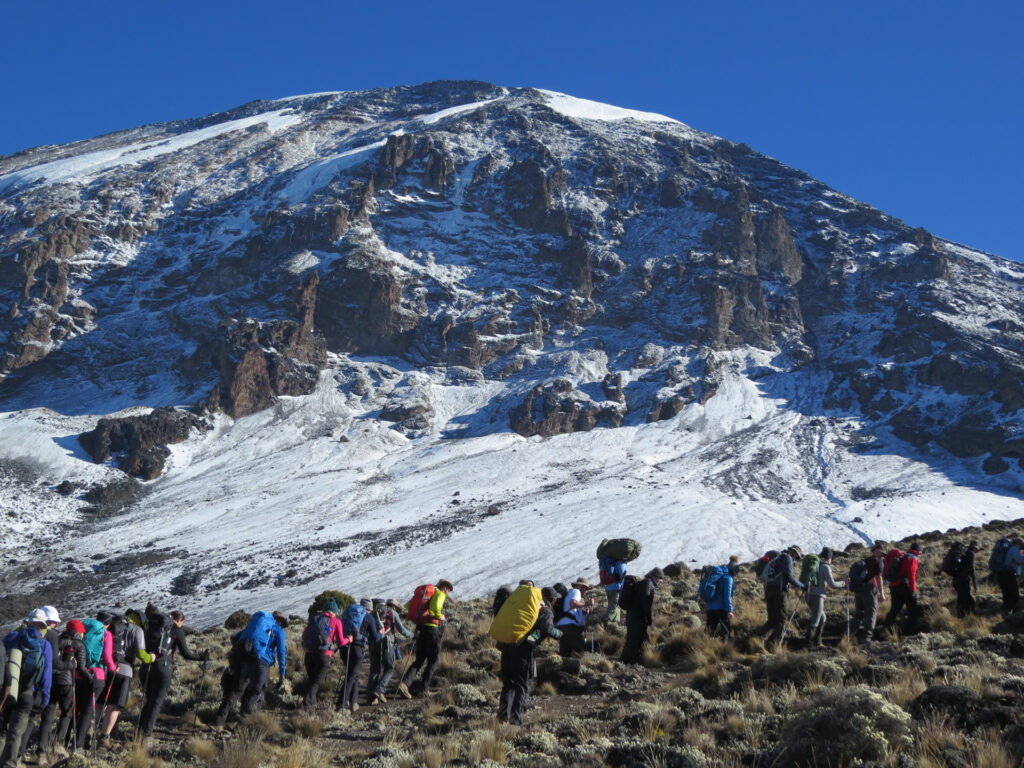
The summit on the crater rim of Kibo and the highest point in Africa, reached at sunrise on most climbs.
Kibo, Mawenzi & Shira
Three volcanic cones: snow-topped Kibo, the jagged peaks of Mawenzi and the high Shira Plateau.
Glaciers & ice fields
The remaining summit glaciers are a striking sight - and a reminder of how the mountain is changing.
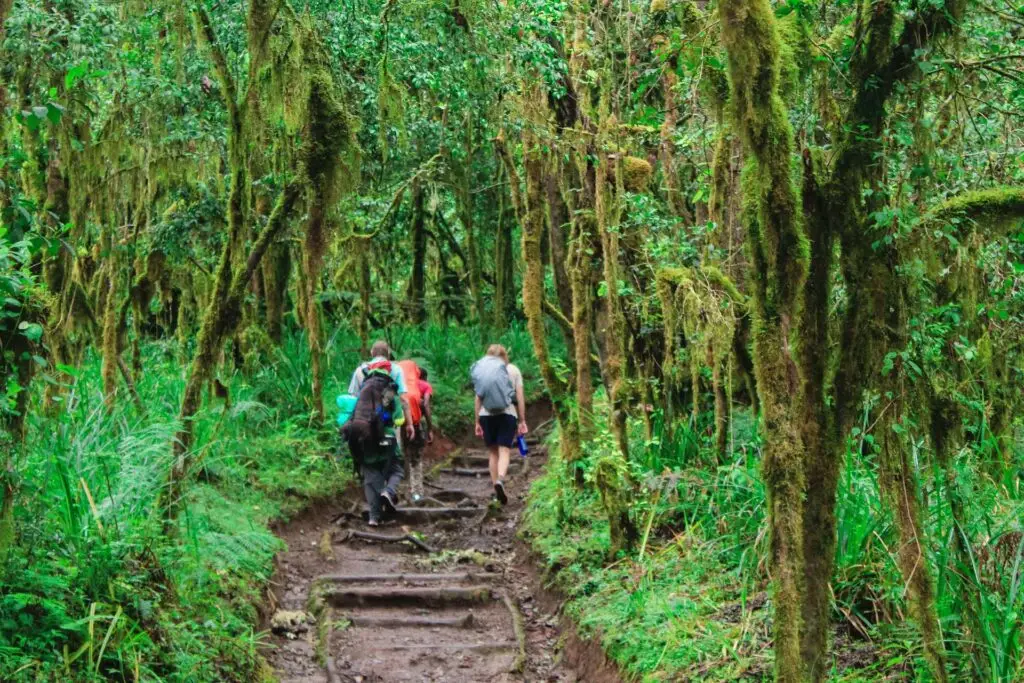
Montane rainforest
The lower slopes are covered in lush forest, home to colobus and blue monkeys.
Giant groundsels & lobelias
Strange, giant plants found in the moorland zone, unique to the high East African mountains.
Barranco Wall
A famous scramble on the Machame and Lemosho routes with spectacular views - steep but non-technical.
Wildlife, plants and climate zones on Kilimanjaro
Kilimanjaro is not a big-game safari destination, but the forest belt on the lower slopes is full of life. Above the forest, the landscape becomes open moorland and alpine desert where few animals live, and the unique plant life becomes the highlight.
- Black-and-white colobus
- Blue monkey
- Bushbuck
- Duikers
- Four-striped grass mouse
- Chameleons
Birds & unique plants
Look out for forest birds on the first day, and for ravens and birds of prey higher up. The moorland zone is famous for giant groundsels and giant lobelias.
- Hartlaub’s turaco
- White-necked raven
- Alpine chat
- Augur buzzard
- Giant groundsel
- Giant lobelia
Most wildlife is seen in the forest zone on the first day of the climb. Sightings are never guaranteed.
Best time to visit Kilimanjaro
Every season offers something different. Here is what to expect through the year. For the bigger picture, read our guide to Tanzania's travel seasons.
January - early March
Warmer days, clear skies and fewer climbers than mid-year - a great time to climb.
March - May
Heavy rain on the lower slopes and snow higher up. Trails are muddy and quiet; few operators recommend climbing.
June - October
The most popular climbing season with stable weather. Nights near the summit are very cold.
November - December
Afternoon showers are common, but climbing is possible with good rain gear. Quieter trails.
Weather and climate
Weather on Kilimanjaro depends more on altitude than on the month. At the gates it can be warm and humid, while summit night temperatures often fall well below freezing, with strong wind chill. Expect sun, rain, mist and possibly snow on the same climb, and pack warm, waterproof layers whatever the season.
Things to do and activities in Kilimanjaro
Only activities available in and around the destination are listed. Some require separate permits and are arranged in advance.
Kilimanjaro summit climbs
Guided climbs on the Marangu, Machame, Lemosho, Rongai, Umbwe and Northern Circuit routes.
Marangu village & waterfalls
A day trip on the lower slopes to waterfalls, banana farms and Chagga culture.
Coffee farm tours
Learn how local farmers grow, roast and brew Kilimanjaro coffee.
Day hikes
Short guided hikes into the forest zone for travellers who do not want to climb to the summit.
Mount Meru acclimatisation
Climb Tanzania’s second-highest mountain before Kilimanjaro to adapt to altitude.
Safari after the climb
Relax on a game drive in Tarangire, Ngorongoro or the Serengeti after your summit.
Climbing experiences
Most climbers spend a night in Moshi or Arusha before and after the climb. Longer routes such as Lemosho and the Northern Circuit give the best acclimatisation and summit success, while Marangu is the only route with hut accommodation. Many guests finish with a safari or a few days on Zanzibar.
Explore our toursWhere to stay in Kilimanjaro
Before and after the climb you stay in Moshi or Arusha. On the mountain you sleep in huts on the Marangu route or in tents on all other routes.
Hotels in Moshi & Arusha
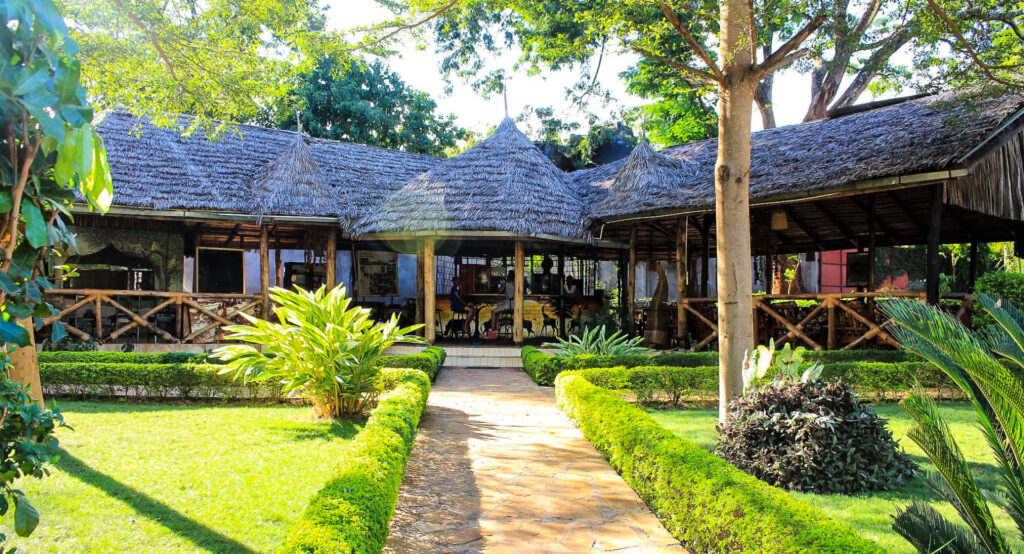
Comfortable hotels and lodges for the nights before and after your climb.
Mountain huts (Marangu)
Simple shared huts with bunk beds on the Marangu route: Mandara, Horombo and Kibo huts.
Mountain camping
On all other routes you sleep in tents at designated campsites, with a mountain crew setting up camp.
How to get to Kilimanjaro
Moshi is about an hour from Kilimanjaro International Airport and 1.5 - 2 hours from Arusha. We transfer you to your route gate on day one.
Kilimanjaro International Airport (JRO), between Moshi and Arusha, has international and domestic flights.
How many days do you need?
Most climbs take 6 to 9 days on the mountain. The more days you allow, the better your body adapts to altitude and the higher your chance of reaching the summit - we usually recommend 7 days or more. Add a night in Moshi or Arusha before and after your climb.
Book your adventureKilimanjaro climbing fees
Indicative non-resident adult rates including 18% VAT for the 2025/26 season, based on published Kilimanjaro National Park tariffs. Fees are set by TANAPA, can change without notice, and the total depends on your route and number of days. Your Vafe Tours climb quote always includes the exact park fees.
Official information: Tanzania National Parks (TANAPA)
| Conservation fee | approx. US$82.60 per adult / day |
|---|---|
| Camping fee (all routes except Marangu) | approx. US$59 per adult / night |
| Hut fee (Marangu route) | approx. US$70.80 per adult / night |
| Rescue fee | approx. US$23.60 per climber / climb |
| Children 5 - 15 | reduced conservation and camping fees |
Travel tips and what to pack
- Choose a longer route - extra days improve acclimatisation and summit success
- Train with long hikes and stair climbs in the months before you travel
- Pack warm layers, a down jacket, gloves, a warm hat and a good sleeping bag
- Break in your hiking boots before the climb
- Drink plenty of water and walk slowly - “pole pole”
- Ask your doctor about altitude sickness and make sure your insurance covers trekking to 6,000 m
More advice: 5 important things to do before travelling to Tanzania.
Cultural experiences
The lower slopes are home to the Chagga people. Village walks around Marangu and Moshi introduce their farms, coffee, traditional houses and history.
Families & age limits
Kilimanjaro National Park sets a minimum age for summit climbs, so check with us before booking with children. Families with younger children can enjoy day hikes, waterfalls and coffee tours on the lower slopes.
Honeymoon & celebration climbs
Reaching the Roof of Africa together is an unforgettable way to celebrate - and it pairs perfectly with a romantic safari and Zanzibar beach finale.
Frequently asked questions about Kilimanjaro
Can't find your answer? Contact our safari experts - we're happy to help.
How high is Mount Kilimanjaro?
Kilimanjaro’s summit, Uhuru Peak, is 5,895 metres (19,341 ft) above sea level - the highest point in Africa.
Do I need climbing experience?
No technical climbing experience is needed. Kilimanjaro is a trek, but you should be reasonably fit and allow enough days to acclimatise.
How many days does it take to climb Kilimanjaro?
Between 5 and 9 days depending on the route. We recommend at least 7 days for better acclimatisation and summit success.
What is the best route for beginners?
Longer routes such as Lemosho or Machame (7 days) offer good acclimatisation. Marangu is the only route with huts, while Rongai is quieter and approaches from the north.
When is the best time to climb Kilimanjaro?
The driest months are January to early March and June to October. April and May are the wettest months.
Are park fees included in your climb prices?
Yes. Our Kilimanjaro quotes include all mandatory park fees, guides, porters, meals and mountain accommodation. Each quote lists exactly what is included.
Can I combine Kilimanjaro with a safari?
Yes. Many guests climb Kilimanjaro and then join a safari to Tarangire, Ngorongoro and the Serengeti, or relax on Zanzibar.
Tours on and around Kilimanjaro
6 Days Mount Meru Trekking Adventure
Arusha National ParkFrom $2,379View details →

Marangu Village & Waterfalls Day Trip
Kilimanjaro lower slopesPrice on requestView details →
Want to climb Kilimanjaro? Tell us your dates, group size and preferred route and we'll prepare a tailor-made climb and quote.
Plan your climbCombine Kilimanjaro with other destinations
After your climb, unwind on a safari in the northern parks or on the beaches of Zanzibar. See also 5 must-visit places in Tanzania.
Plan your Kilimanjaro climb with Vafe Tours
Share your travel dates and preferences and our team will prepare a personalised itinerary and quote, free of charge and with no obligation.
- Tailor-made climbs & safaris
- Experienced local guides
- Licensed operator based in Arusha